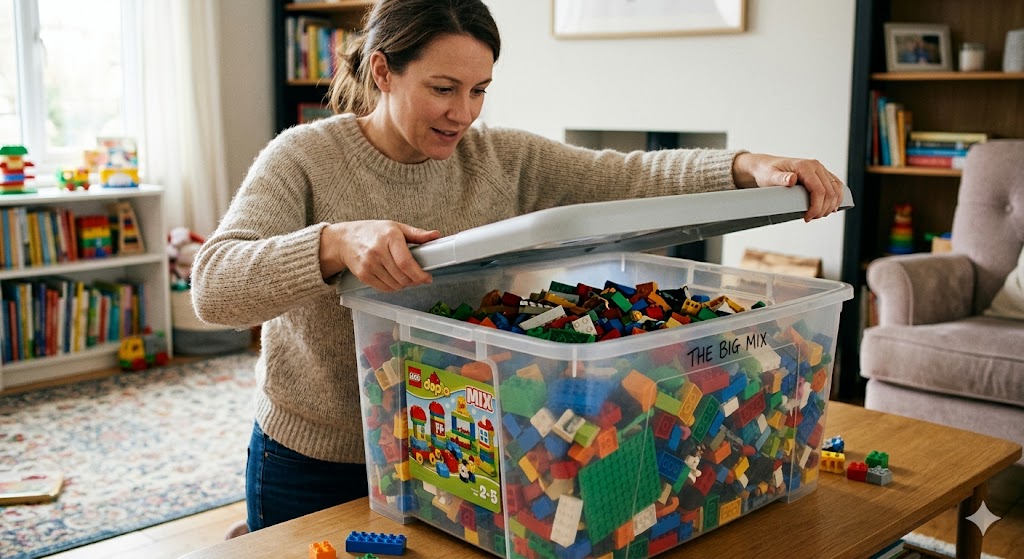
There's usually a moment you notice it: the LEGO hasn't been touched in months, the kids are onto other things, and the tub in the corner has quietly become furniture. Deciding what to actually do about it is often harder than the selling part itself.
Is it actually time?
A few signs it's genuinely moved on rather than just being between phases: nobody's opened the tub in six months or more, the interest has shifted to something else entirely (gaming, sport, a different hobby), and you're the one thinking about the space more than they are. If it's a temporary lull rather than a real move-on, there's no rush — LEGO keeps its value well, so waiting costs you nothing.
What's worth keeping back
Before it all goes, it's worth a two-minute sort for anything with sentimental weight rather than resale weight: a first set, something built together, a genuinely rare or discontinued piece your child was proud of. These are usually a handful of items, not the whole tub — everything else can go as one lot without a second thought.
If the kids are old enough to have an opinion
With younger children, it's usually easier not to make a big event of it. With older kids and teenagers, a quick "is there anything in here you actually want to keep" conversation tends to head off any later objection, and often they're more ready to let it go than you'd expect — it's frequently the parent who's more attached to the tub than the (now teenage) former owner.
Selling the rest
Once you've pulled out anything worth keeping, the rest doesn't need sorting, cleaning, or matching back to sets — loose bricks, part-built models and stray minifigures can all go together as one mixed lot.