If you're looking at a tub of your kids' old LEGO wondering whether anyone would actually want it — half the sets incomplete, pieces everywhere, not a box in sight — here's the short answer: yes, you can sell it, and it's worth something.
Incomplete LEGO is one of the most common things people sell. You are not the exception. Here's how it works and what to expect.
Why incomplete LEGO still has value
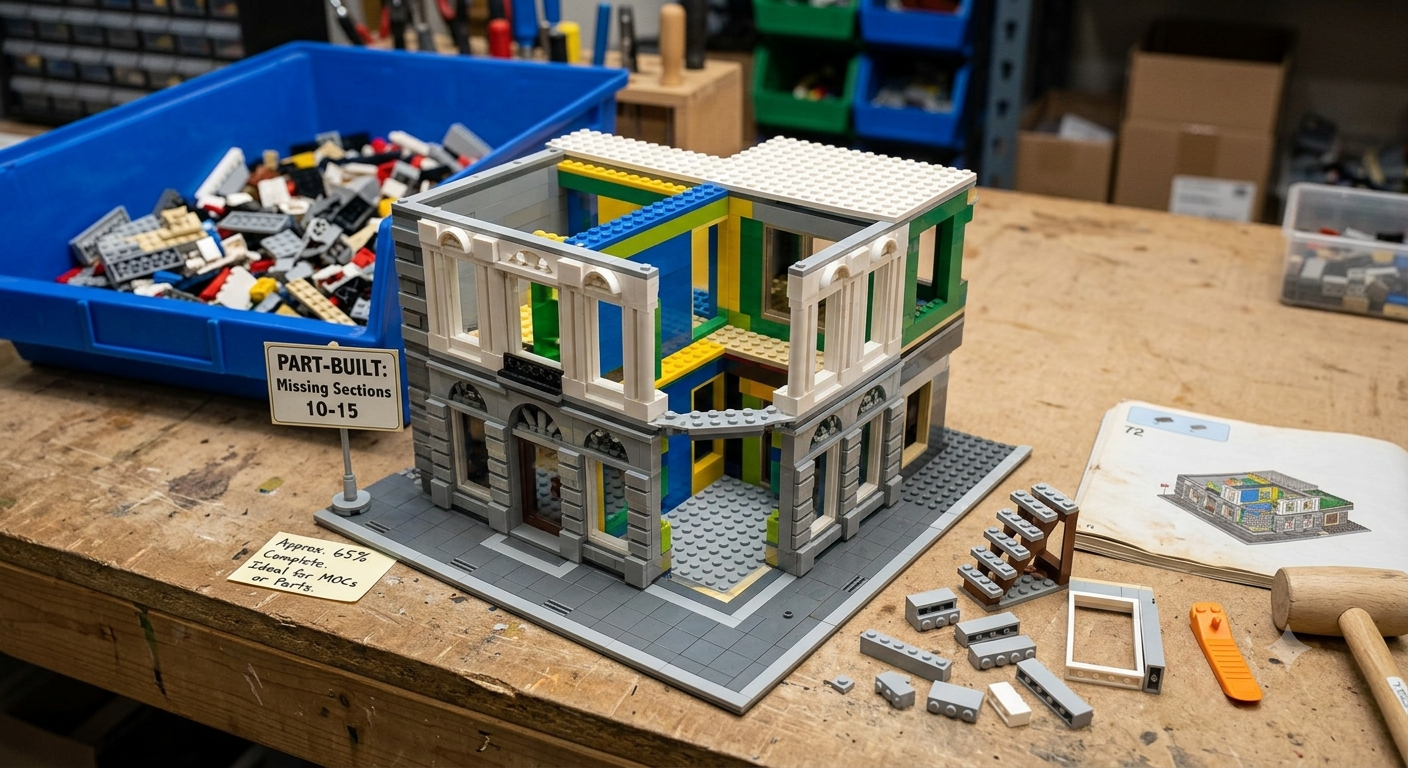
A LEGO brick doesn't stop being useful just because it's been separated from its set. Buyers — including buy-back services like ours — break collections down and give the pieces a second life: rebuilding sets, selling parts individually, or passing bricks on by weight. Nothing goes to waste, which is exactly why your "useless" mixed tub still has a value.
So the missing instructions, the long-gone box, the set that's only 80% there — none of that makes it worthless. It just changes how it's valued.
How missing pieces affect the price
It helps to know the difference between two things:
- Loose, mixed bricks are usually valued by weight. It doesn't matter that they're not in sets or sorted by colour — you just need a rough idea of how heavy the pile is. Missing pieces are irrelevant here, because it's all going in together anyway.
- Complete sets are valued individually and are worth the most when they're whole, clean, and have their minifigures. A set that's missing a few pieces is worth a bit less than a complete one — but it's still worth more than nothing, and often more than you'd guess.
In other words: a complete set earns top price, but an incomplete one isn't rejected. It simply slots into the valuation at a fair level for its condition.
What actually moves the needle
If you want the best price for what you've got, these are the things that matter most — in order:
- Minifigures. The little figures often carry more value than the bricks around them. Before you sell, it's worth a quick rummage through old toy boxes and down the sofa to gather any strays.
- Sealed sets. Anything never opened is the most valuable of all. Set those aside.
- Complete-ish sets. A set with most of its pieces is worth more than the same set in bits — but don't stress about hunting for every last 1x1.
- Sheer quantity. With loose bricks, weight is your friend. The bigger the tub, the more it adds up.
What doesn't matter much: whether it's sorted, whether you have boxes, or whether you can remember which set is which.
What you don't need to do
People often delay selling because they think there's prep involved. There isn't:
- You don't need to rebuild sets.
- You don't need to match loose pieces back to their sets.
- You don't need the boxes or instructions.
- You don't need to sort by colour or type.
Send it as it is. Honestly, the "messy tub" is our bread and butter.
How to sell it
- Get a price. Give a rough weight for the loose bricks, and list any complete or sealed sets by name or number if you can. You'll get an instant valuation. Find out what your LEGO is worth →
- Box it up safely. Bag the small bits so they don't escape, then pack everything into a sturdy box.
- Send it free, using a prepaid label or home collection.
- Get paid, usually the next day, once it's checked.
The bottom line
Incomplete, boxless, mixed-up LEGO is completely sellable — and for a typical family collection, it adds up to a tidy little sum for something that's been gathering dust. You don't need to fix it, sort it, or apologise for the state of it.