When you sell LEGO, condition is one of the things that decides the price — but probably less than you'd think, and not in the ways people assume. Here's the simple picture.
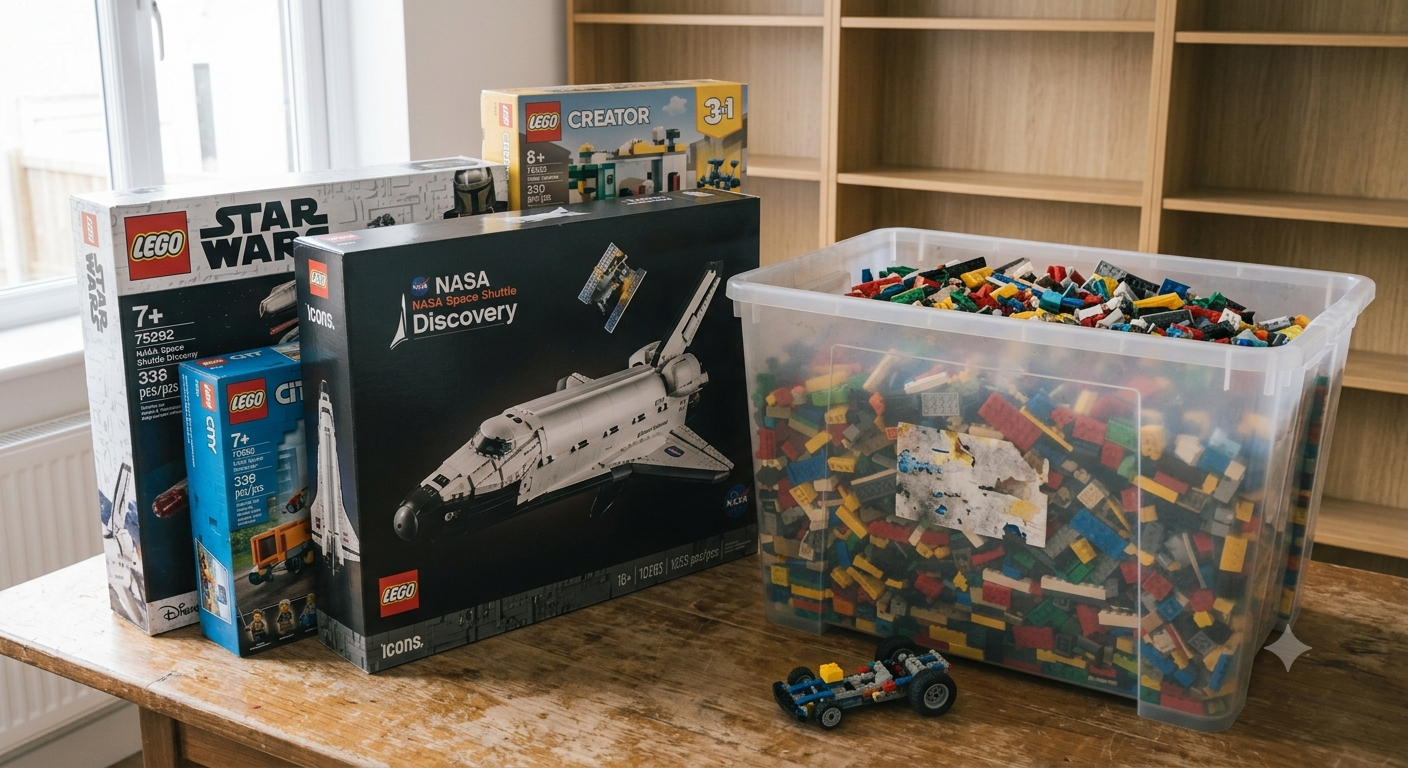
The condition ladder, top to bottom
Roughly, value runs in this order:
- Sealed / brand new — never opened, factory-sealed. Worth the most. These are gold; set them aside.
- Used but complete, with box — a whole set, clean, with its box and instructions. Strong value.
- Used and complete, no box — the same set without packaging. Still good, slightly less.
- Used, incomplete sets — missing a few pieces. Worth less than complete, but still bought.
- Loose, mixed bricks — valued by weight, regardless of which set they came from.
Almost all family collections sit in the bottom three rungs, and that's completely normal — and still worth money.
What "condition" actually means for used LEGO
For loose bricks, buyers care about:
- Cleanliness — bricks free of dirt, paint, glue or chew marks are worth more.
- No damage — heavily scratched, sun-faded or broken bricks are worth less.
- No mixed-in rubbish — keep out non-LEGO bits, batteries, and broken pieces.
A quick once-over to pull out anything grubby or non-LEGO is the only "prep" worth doing.
What doesn't drag the price down
- Bricks being mixed up and unsorted — fine, they're weighed together.
- No boxes or instructions — minor for sets, irrelevant for loose.
- Sets being already built — no need to dismantle.
The takeaway
Condition sets the rate, but it rarely makes LEGO worthless. The most valuable thing you can do is set aside anything sealed, gather your minifigures, and give the loose bricks a quick clean. Everything else is normal wear that buyers expect.